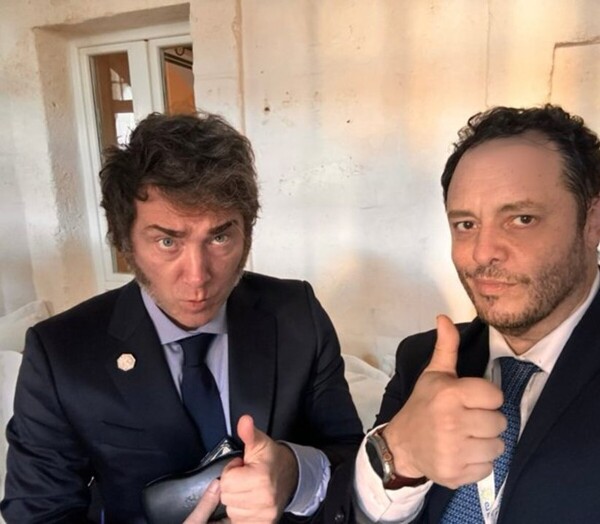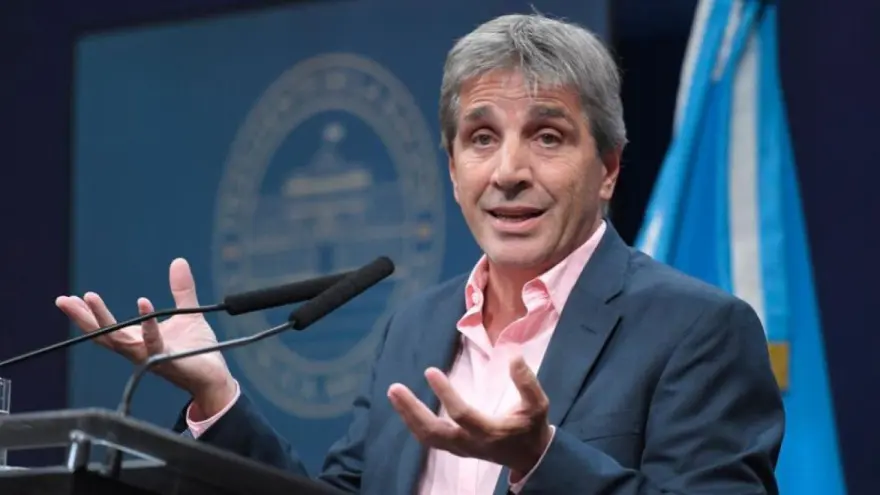
The Minister of Economy, Luis Caputo, firmly defended the tender for pipes for the development of Vaca Muerta, which was awarded to the Indian company Welspun, and downplayed the public clash between President Javier Milei and Techint's CEO Paolo Rocca after the Argentine company's defeat in that process. 'In the previous tender, the tubes came out at 4,000 dollars per ton. In this last one, they came out at 1,400 dollars. The first mistake was to pass it on to the people,' he emphasized. In contrast, Caputo defended the latest tender, which was awarded to Welspun for 203 million dollars for the supply of pipes for a 480-kilometer pipeline. The minister also noted that in the coming months, new opportunities will arise for the local sector. 'We work for Argentines, and Argentines want better products at better prices,' he stated, in line with the logic of openness and competition promoted by the Milei administration. In this context, Caputo described the process as a 'learning' experience for both the State and the supplier companies. 'Now the private sector pays for it,' he stressed. The minister admitted that awarding the contract to a foreign company generated political and business noise, but he ruled out that it is an ideological or anti-industrial decision. 'It's a war against the old model, and that naturally generates resistance,' he affirmed. For Caputo, the message is clear: the State will stop validating high prices and schemes that, in his opinion, ended up harming taxpayers and delaying energy development. 'It's not a war with anyone in particular. It's a matter of incentives,' he explained, suggesting that international competition could force a recomposition of offers from traditional companies.